05 Dec Zoomph’s Solutions for Brands Measuring Successful Sponsorship ROI in 2026
Sports sponsorships have always been one of the most powerful ways to build brand relevance. They connect brands to culture, community, and emotion in a way no traditional ad can replicate.
But for all their upside, sponsorships have historically shared one major flaw:
Brands haven’t had a consistent, trusted way to measure what they’re getting in return.
As marketing budgets face greater scrutiny and leadership pushes for measurable impact, the era of instinct-driven partnerships is ending. A new one is emerging: data-anchored sponsorship strategy – where value, performance, and ROI are transparent, real-time, and comparable across every partner.
Below are four of the biggest challenges brand marketers face today and how modern measurement platforms like Zoomph are redefining the sponsorship playbook.
1. The ROI Problem: Proving Value With Data, Not Anecdotes
For years, sponsorship ROI has been one of partnership teams’ toughest internal conversations. Recaps rely heavily on partner-provided data, methodologies vary widely, and the metrics used often fail to tie back to brand KPIs.
The result? Teams walk into leadership meetings telling stories instead of reporting results.
Independent, third-party measurement finally changes that.
Zoomph provides brands with a unified valuation model across all partners, capturing social value, brand exposure, impressions, broadcast visibility, and earned media impact in one consistent framework. Instead of anecdotal highlights, brands get defensible ROI reports that withstand executive scrutiny and support smarter investment decisions in the future.
2. The Visibility Problem: Not All Sponsorship Assets Perform Equally
Even when a partnership performs well, most teams struggle to answer the critical questions:
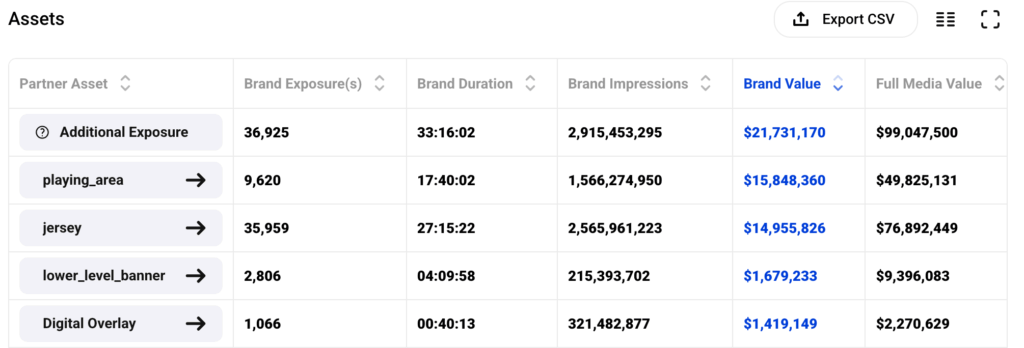
Which assets actually drove that success? Was it the broadcast signage? The jersey patch? The tunnel feature? The final score graphics on social?
Without asset-level visibility, partnership and digital teams can’t optimize spend, refine strategy, or push partners toward higher-performing inventory.
Zoomph solves this through advanced computer vision and social/broadcast logo detection, revealing exactly which placements deliver the most media value. This empowers brand teams to:
- Double down on high-performing assets
- Guide the creative with actual performance data
- Maximize value across the full partnership lifecycle
- Enter negotiations with clarity and leverage
It’s no longer guessing; it’s granular precision that helps brands make sure every dollar is invested strategically.
3. The Benchmarking Problem: How Do We Compare to Competitors?
Strong results are only half the story. Leadership increasingly wants to know:
How do we stack up against the category?
Are we outperforming competitors?
Are we investing in the right leagues and teams?
Zoomph’s Benchmark tool answers these questions. With our market and league comparisons, brands get transparency into competitor performance and opportunities across the entire sports ecosystem. This context strengthens negotiations, justifies renewals, and identifies properties that align with brand objectives – not just availability or intuition.
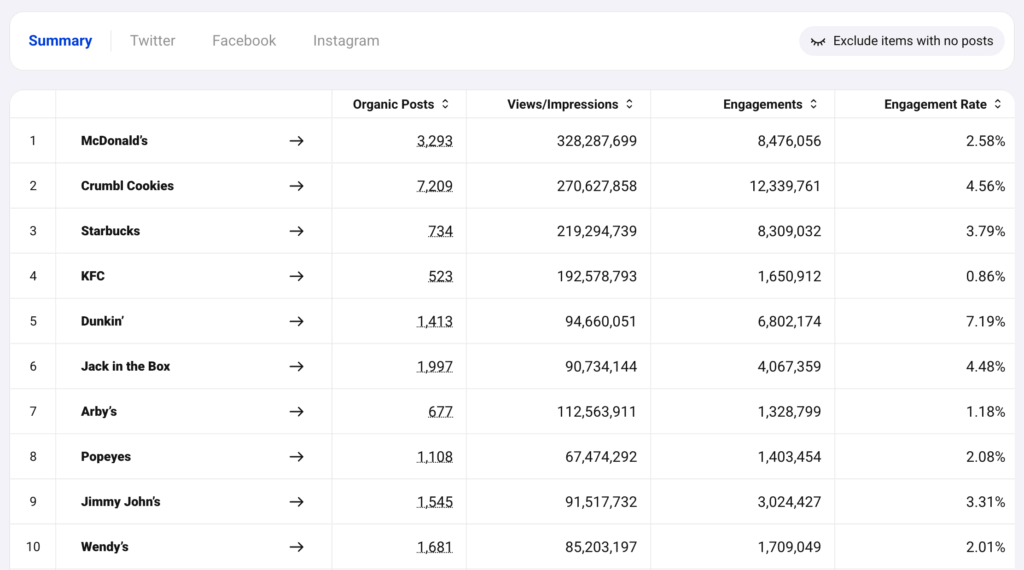
4. The Timing Problem: Brands Need Data IN the Moment, Not Months Later
Traditional sponsorship reporting moves painfully slow.
Recap decks often arrive weeks or months after a campaign, long after the cultural moment has passed, and far too late to optimize creative, placements, or activations.
Real-time analytics flips this model.
With Zoomph’s live dashboards capturing social, broadcast, and digital performance as it happens, brands can finally adjust strategies in the moment, shifting budget, updating creative, or focusing on assets gaining traction right now. It turns our brand partner’s full sponsorship portfolio from retrospective reporting into a living, optimizable channel.
The Future of Sponsorship Strategy Is Transparent, Accountable, and Data-Powered
For decades, sponsorships were treated as a black box. Impactful but hard to quantify, optimize, or compare.
For Zoomph customers, that is no longer the standard.
Modern partnership teams need clarity. Executives need ROI. And brands deserve partnerships that perform with the same accountability as their paid media investments.
Independent valuation, real-time analytics, asset-level visibility, and competitive benchmarking aren’t “nice to have.” They are the foundation of the next generation of sponsorship strategy – one that delivers measurable, repeatable, defendable results.
This is what Zoomph was built for: A smarter, faster, more transparent way for brands to win in the sponsorship ecosystem.