
02 Jan How Son Heung-min and Thomas Müller Transformed MLS Social Media Performance and Sponsorship Value
Major League Soccer added two of the most recognizable players of their generation last August when Son Heung-min joined LAFC, and Thomas Müller signed with the Vancouver Whitecaps.
The moves represented more than marquee acquisitions. Son and Müller arrived as globally relevant stars whose profiles still command attention far beyond their new markets. Together, their signings underscored a broader shift in MLS – one in which elite international talent increasingly intersects with measurable fan attention and commercial visibility at the club level.
To better understand that intersection, Zoomph analyzed social media performance and jersey sponsor exposure using AI-driven logo detection, comparing periods before and after each signing.
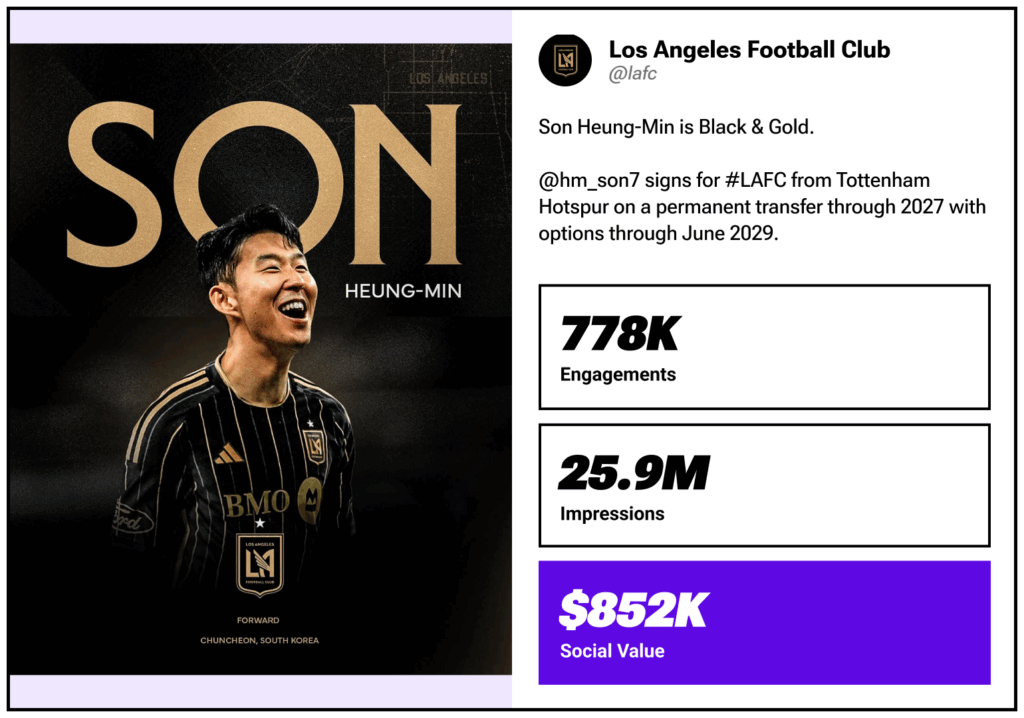
Following Son Heung-min’s arrival, LAFC’s social media performance moved into a materially different operating range across Instagram feed posts, Facebook, X, and YouTube.
Measured on a per-active-posting-day basis, LAFC’s post-signing period coincided with:
- A 224% increase in impressions per active day
- A 246% increase in engagements per active day
- Total impressions rose from 192 million to 282 million, despite a shorter post-signing window
- Total engagements increased by 57%
The lift was visible across every platform. Facebook and X showed sharp gains in engagement density, while YouTube emerged as a major growth driver, reflecting strong international consumption of Son-related highlights and features. LAFC added more than 300,000 followers total across Instagram and Facebook, while its YouTube audience nearly tripled during the post-signing period.
Rather than a brief announcement spike, Son’s presence coincided with a sustained elevation in attention on the days LAFC published content – effectively resetting the club’s digital baseline.
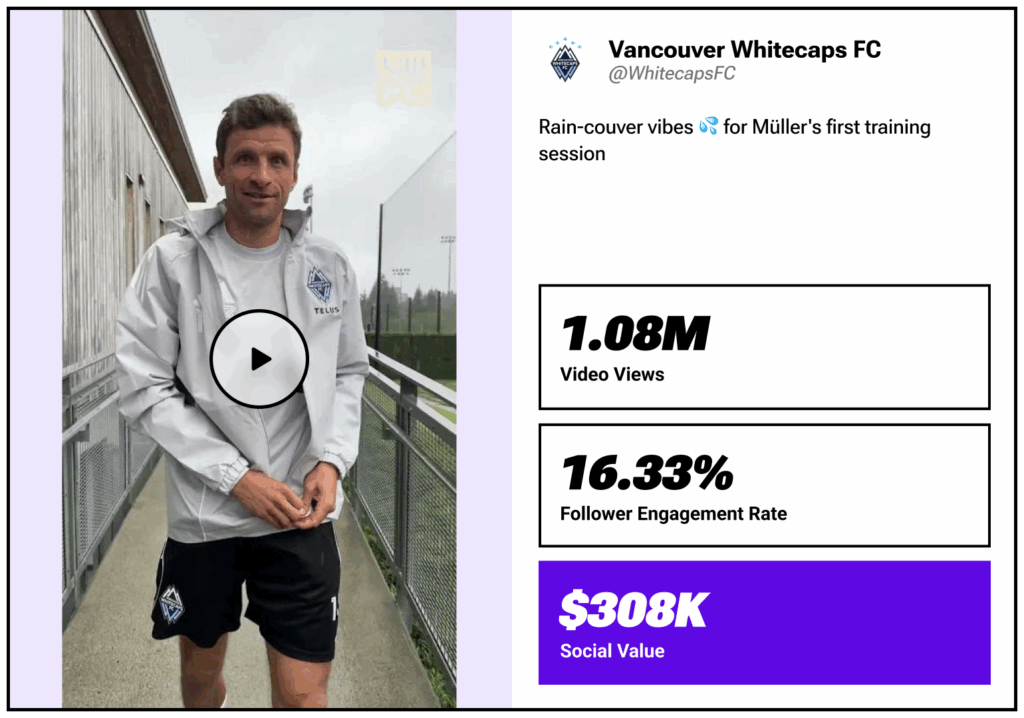
The Vancouver Whitecaps experienced a similarly clear reshaping of digital performance following the arrival of Thomas Müller, particularly in how efficiently their content generated engagement.
After Müller joined the club, Vancouver’s performance per active posting day coincided with:
- A 297% increase in impressions
- A 524% increase in engagements
- A 274% increase in video views, driven largely by YouTube
While Vancouver’s total reach remained smaller than LAFC’s, reflecting differences in market size, Müller-featured content quickly reshaped the Whitecaps’ digital output. Instagram and YouTube emerged as the strongest platforms, with YouTube showing particularly sharp percentage growth from a modest pre-signing baseline – consistent with how globally recognized players often drive long-form and highlight-driven viewing.
The reshaping of digital performance extended beyond club accounts to jersey sponsors.
Using logo detection outputs from the supplied datasets:
LAFC: BMO Harris Bank
- Brand Exposure Value per active day increased by more than 500%
- Logo impressions per active day increased by over 570%
- Total Brand Exposure Value nearly tripled in the post-signing period
Vancouver: Telus
- Brand Exposure Value per active day increased by 576%
- Logo impressions per active day increased by more than 1,200%
- Total logo impressions grew from 13.5 million to more than 123 million
This approach isolates organic sponsor visibility generated through club-published content, without the influence of paid media. In both cases, the signings reshaped the commercial value of club content, increasing sponsor visibility without requiring additional paid media.
Although Son Heung-min and Thomas Müller arrived in different markets and under different circumstances, the patterns that followed were strikingly consistent.
Across both clubs, the period following their arrivals coincided with:
- Sharply higher impressions and engagements per active posting day
- Stronger video consumption, particularly on YouTube
- Material increases in jersey sponsor logo exposure
This analysis does not claim the signings alone caused these changes. It shows that, within a strict platform scope and consistent time windows, the post-signing periods aligned with a clear increase in attention density and sponsor value at the club level.
The signings of Son Heung-min and Thomas Müller did more than add star power to MLS rosters. They reshaped how clubs perform socially and how sponsorship value is generated — offering a clear signal of where the league is headed.
For teams, leagues, and sponsors, the takeaway is straightforward: global talent drives attention, but measuring how that attention translates into real commercial value is what unlocks smarter decisions.
As MLS continues to attract internationally recognized players, organizations need the ability to quantify social performance, track sponsor exposure, and understand which moments and assets truly move the needle. That’s where data-driven measurement becomes essential.
Zoomph helps teams and brands do exactly that — connecting fan engagement to sponsorship value across social platforms, using logo detection and performance analytics to turn moments of attention into measurable outcomes.
To learn how Zoomph helps sports teams optimize content performance, drive sponsorship revenue, and streamline reporting, request a personalized demo.